
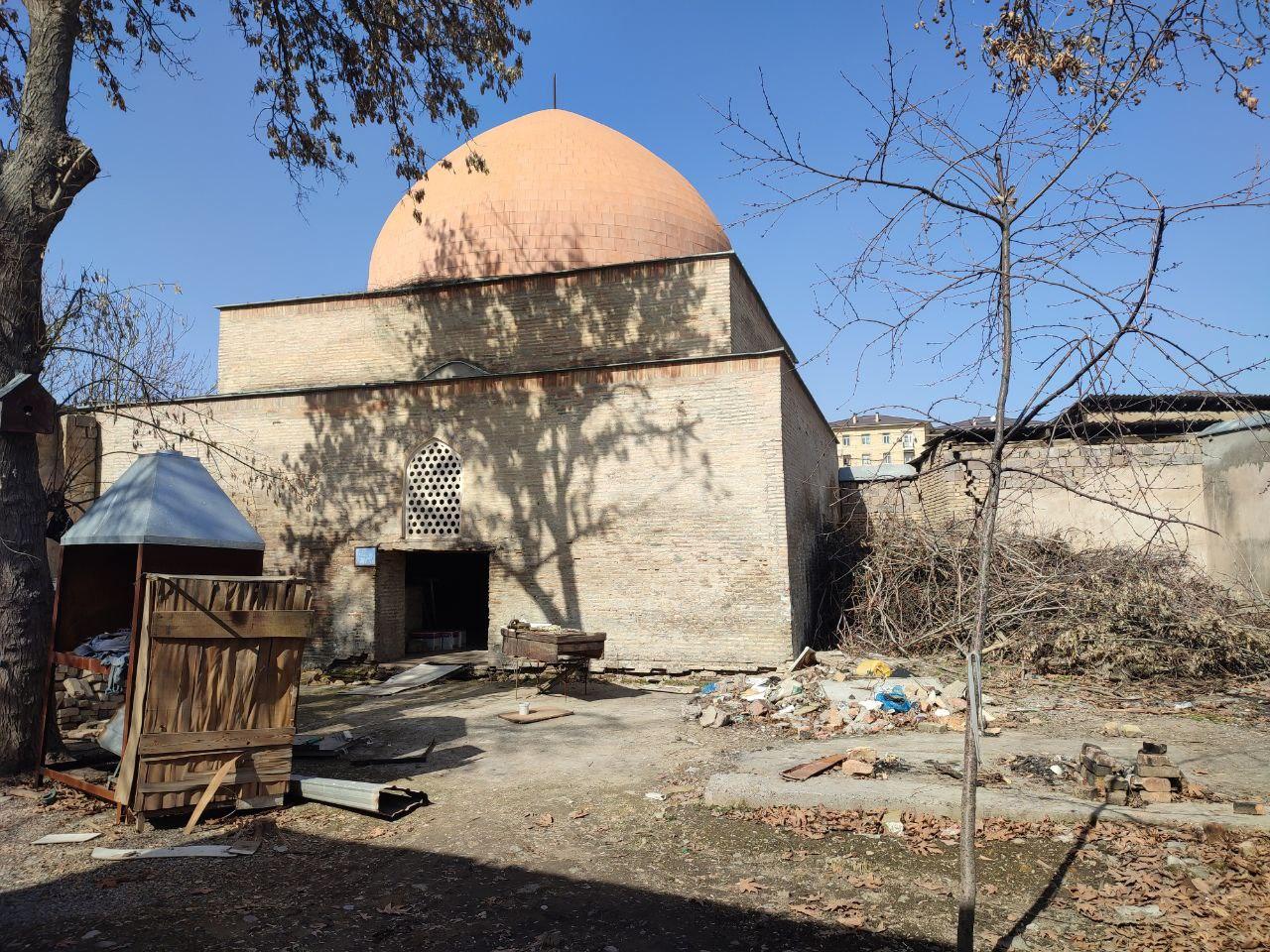
The mosque, with its orange dome
visible from afar, was first registered as a historical monument in 1953 by
I.F. Borodina and subsequently studied and described in detail by researchers.
Judging by its architectural style, the mosque was built in the mid- to late
18th century; more precise data is lacking.
According to waqf records, the mosque
was named after the righteous Arabian Mirkurbansheikh Azizon or after his
descendants, with the prefix "Eshan" added to the name.
In the 1920s, the mosque was closed
and used for commercial purposes. It suffered several fires, and in recent
years, it stood abandoned.
There is a burial site near the mosque;
the remains beneath it were transferred to the Kamalan cemetery, and the
symbolic grave was restored in 2007. The mosque is square in plan, with
plastered walls. There is a mehrab on the western wall. The other three walls
had doors, but only the southern entrance remains; the other entrances are
bricked up.
Near the mosque, there is a large
plane tree, believed to be 300 years old.
In 2023, landscaping of the
surrounding area began, without affecting the mosque.
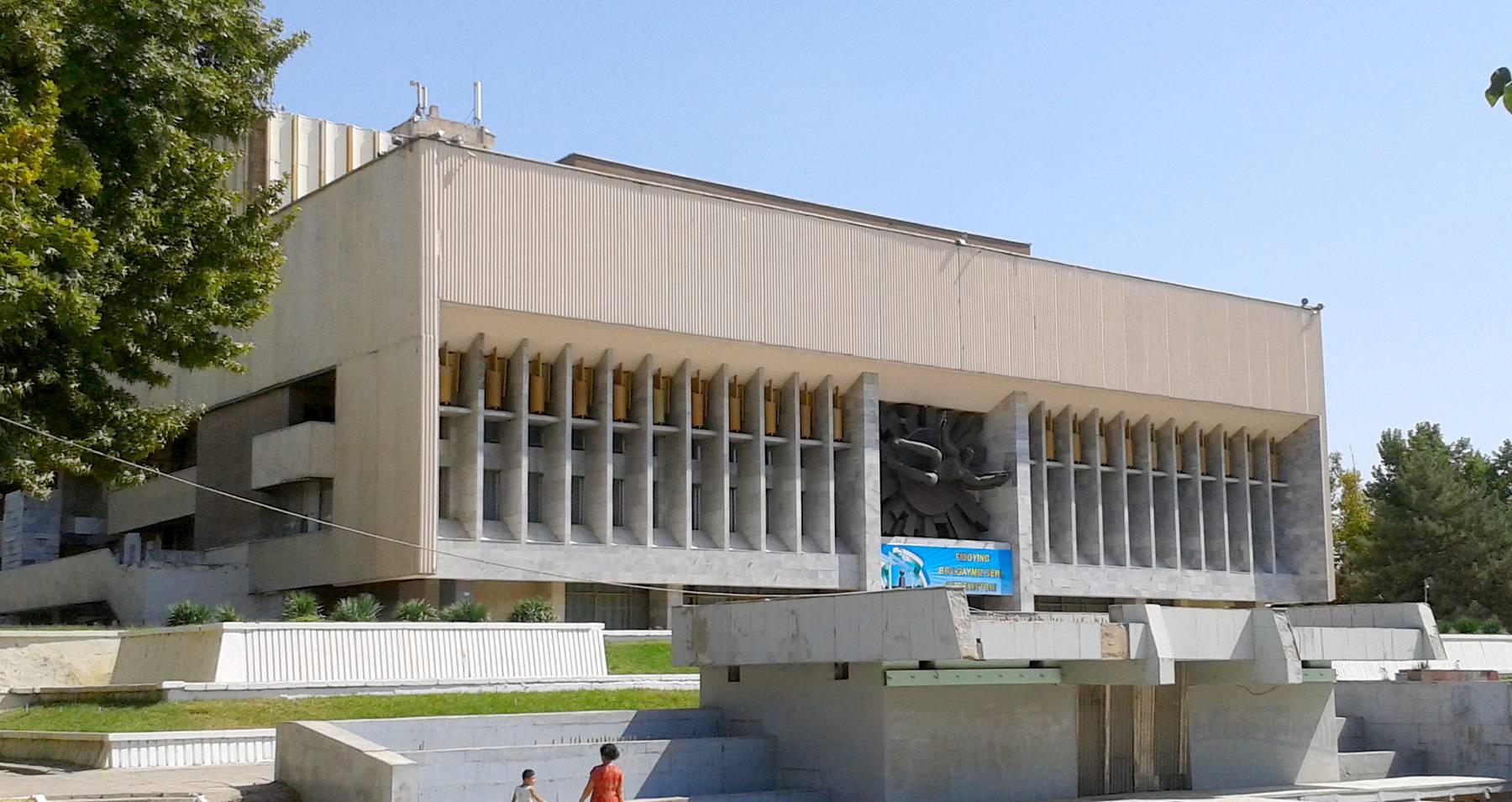
In the aviation builders’ town stands one of Tashkent’s most majestic buildings. Its design was cra...
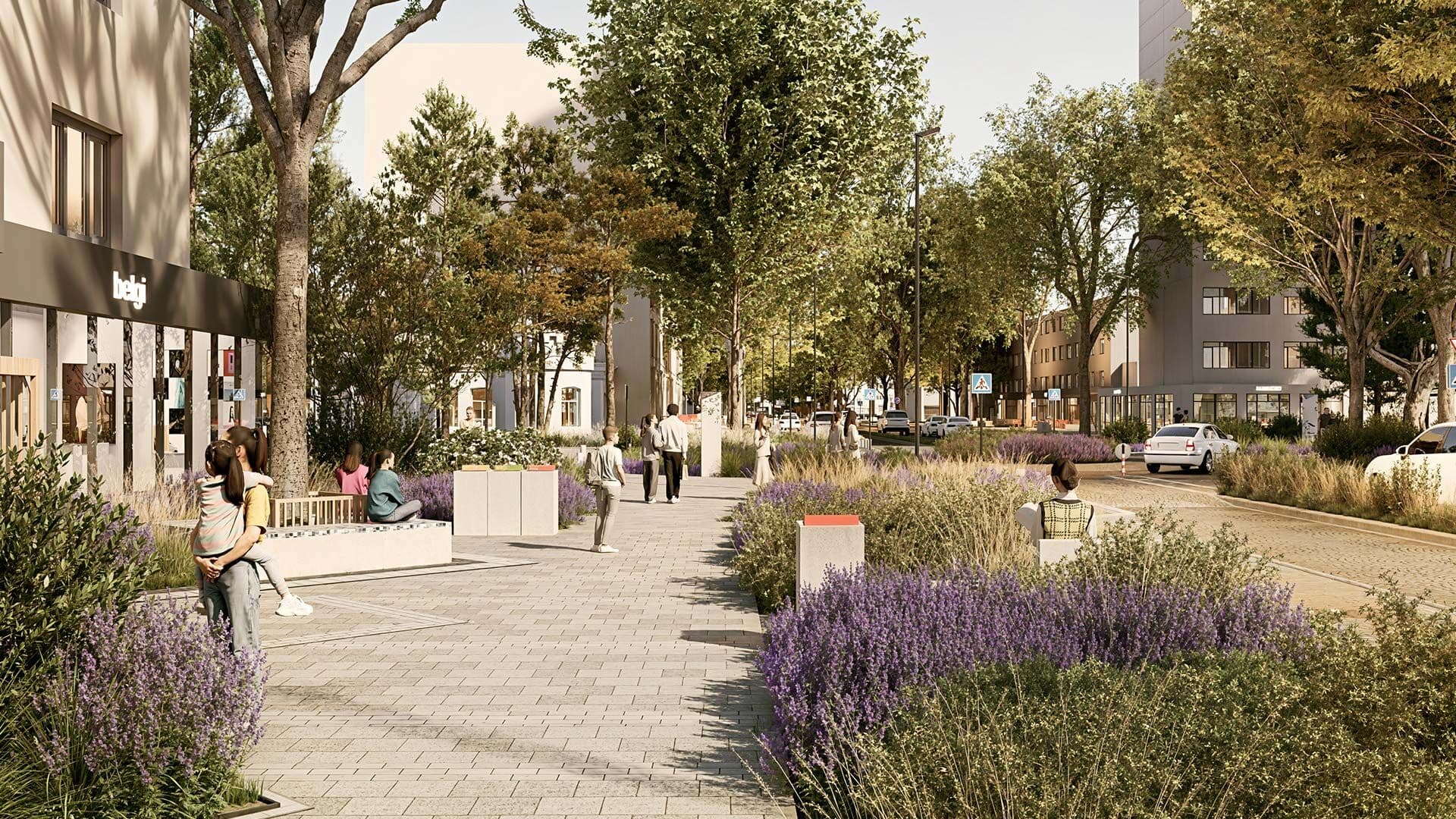
The total length of the street is 2.1 kilometers. All modern conditions have been created here for...
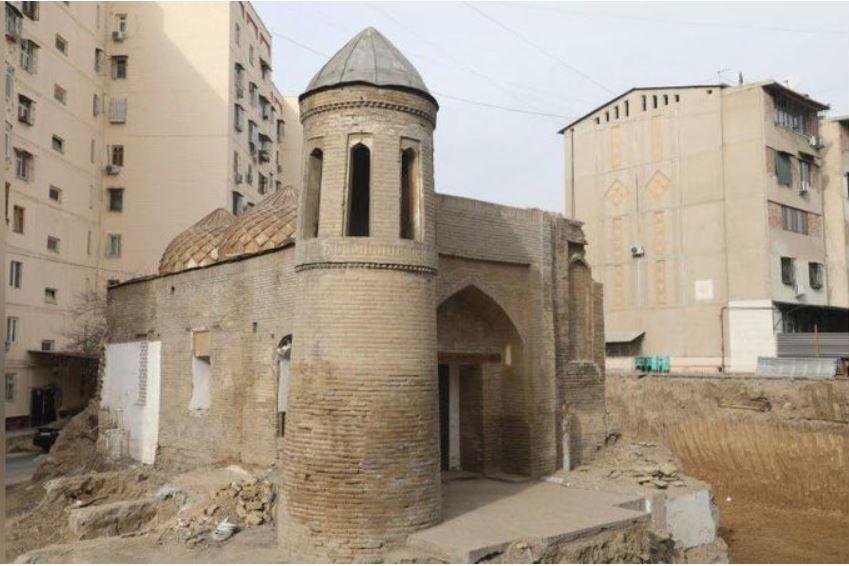
The Baland Mosque was built in 1857. "Baland" means "high," and the mosque received its name from t...
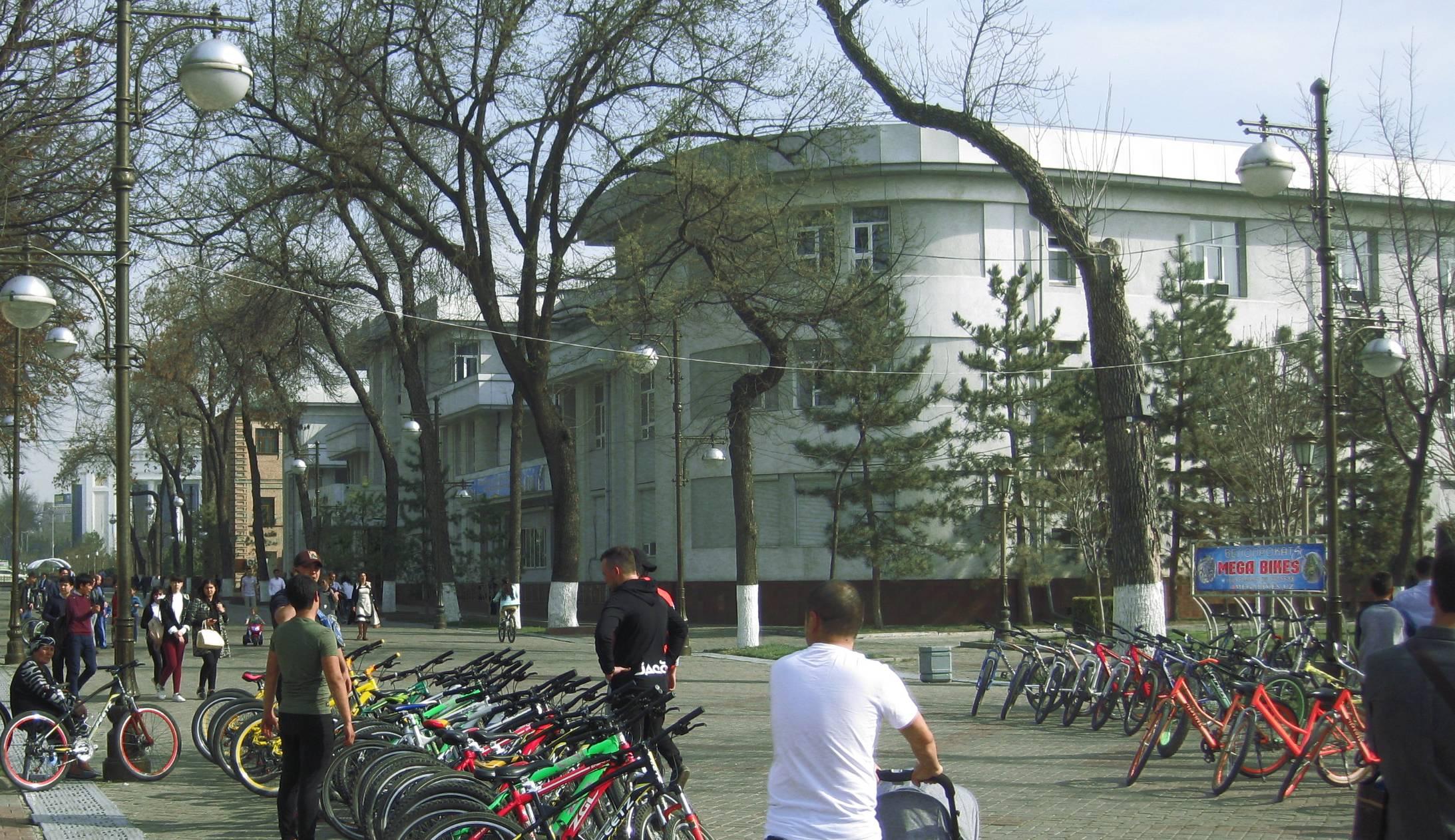
The well-known building on Broadway (Sayilgoh Street) in Tashkent, which now houses the Ministry of...