
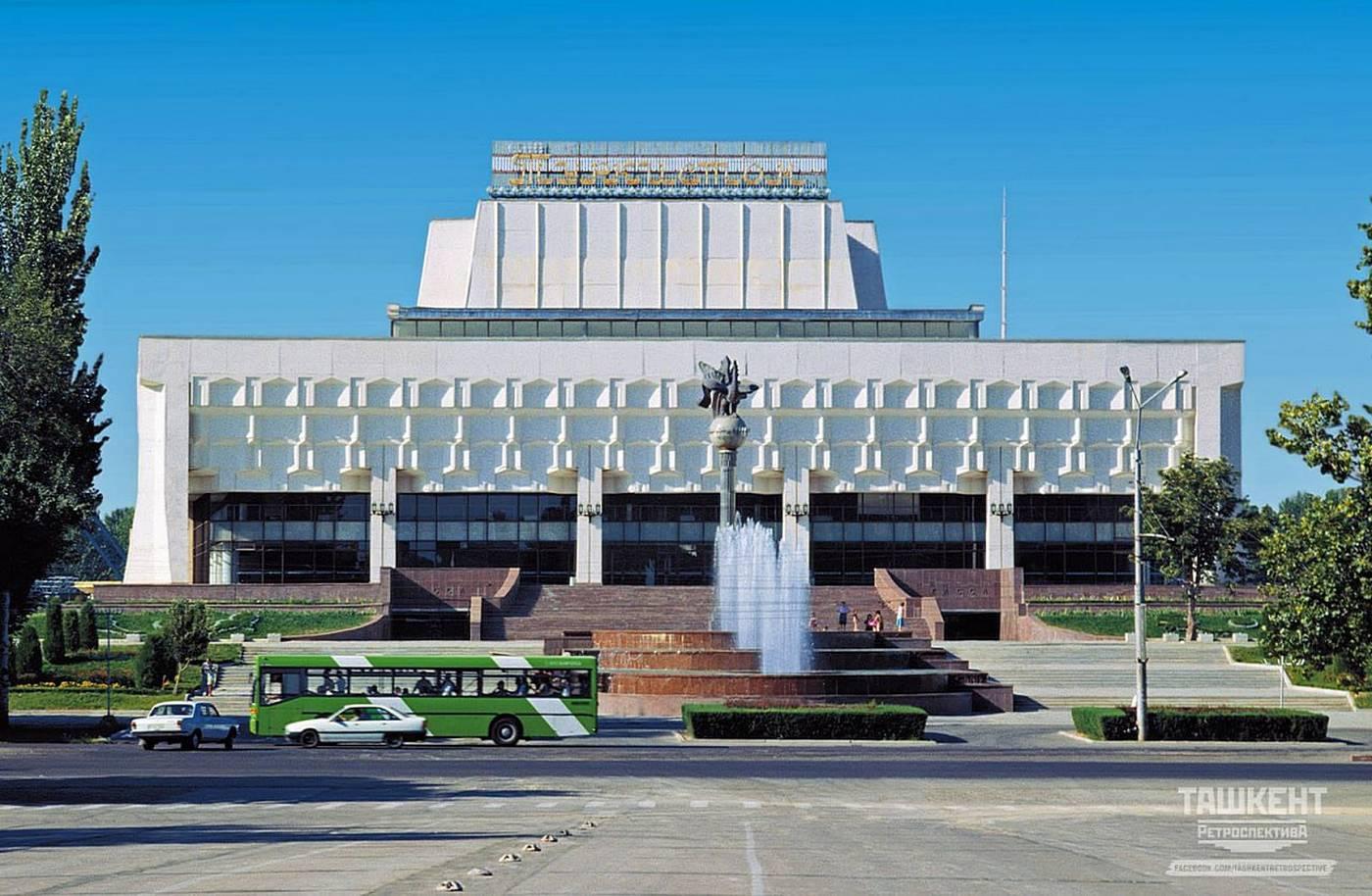
The majestic snow-white building of the concert hall is located at the intersection of Navoi Avenue and the former Parade Alley of Mustaqillik Square.
Project authors: architects Yu. Khaldeyev, M.
Neklyudova, L. Adamov, and F. Tursunov; engineer S. Petrov.
Originally designed for the Russian Drama Theatre, the
theatre eventually moved into the former House of Knowledge building. In 1993,
this building opened as the “Turkistan” Concert Hall. To the left of the main
structure, on the bank of the Ankhor canal, an open-air summer stage was
created, forming a unified concert complex with the main hall.
Architecture historian Olga Kazakova writes: “Over the
25 years from the start of design to completion of construction, this building
managed to change its name, purpose, location, and exterior appearance. It is
precisely because of this that it has become important for understanding the
architectural history of Tashkent.”
The main decoration of the façade consists of
stalactite niches characteristic of the national architectural tradition. In
the white-marble foyer, the stalactite motif continues, but unlike the laconic
façade, here appear carved ganch panels, elegant chandeliers, and ornamental
decoration on the second-floor landings.
The auditorium is adorned with ornamentation stylized
in the Islamic tradition. It is illuminated from above by a richly decorated
elliptical niche with light fixtures.
The hall seats 894: 698 in the parterre and 196 on the
balcony. Its unique stage measuring 31 × 25 metres and 26 metres high is
considered the largest stage platform in the country.
In front of the building towering over Navoi Avenue
stand a fountain and a column topped with a mythical bird.
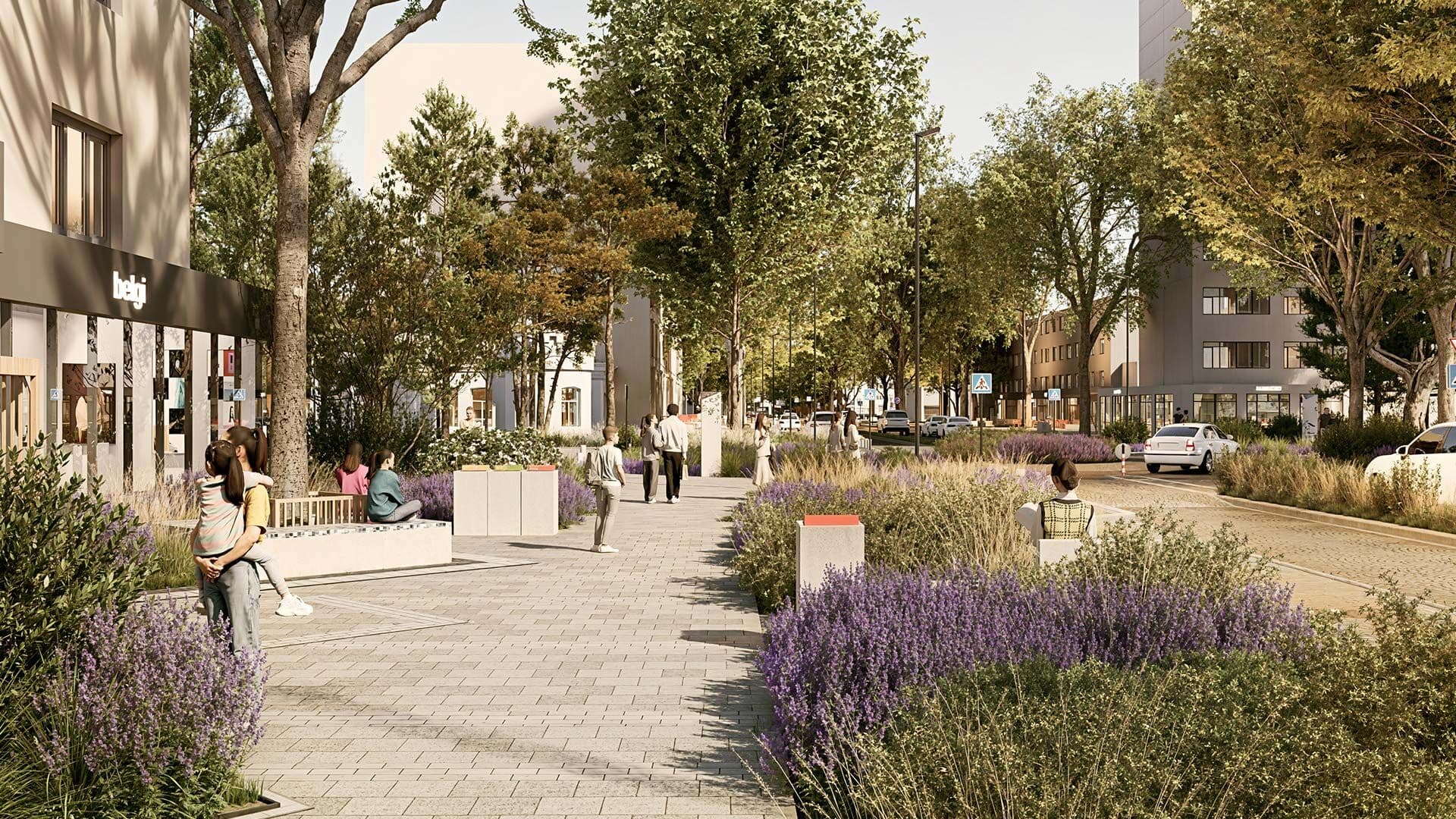
The total length of the street is 2.1 kilometers. All modern conditions have been created here for...
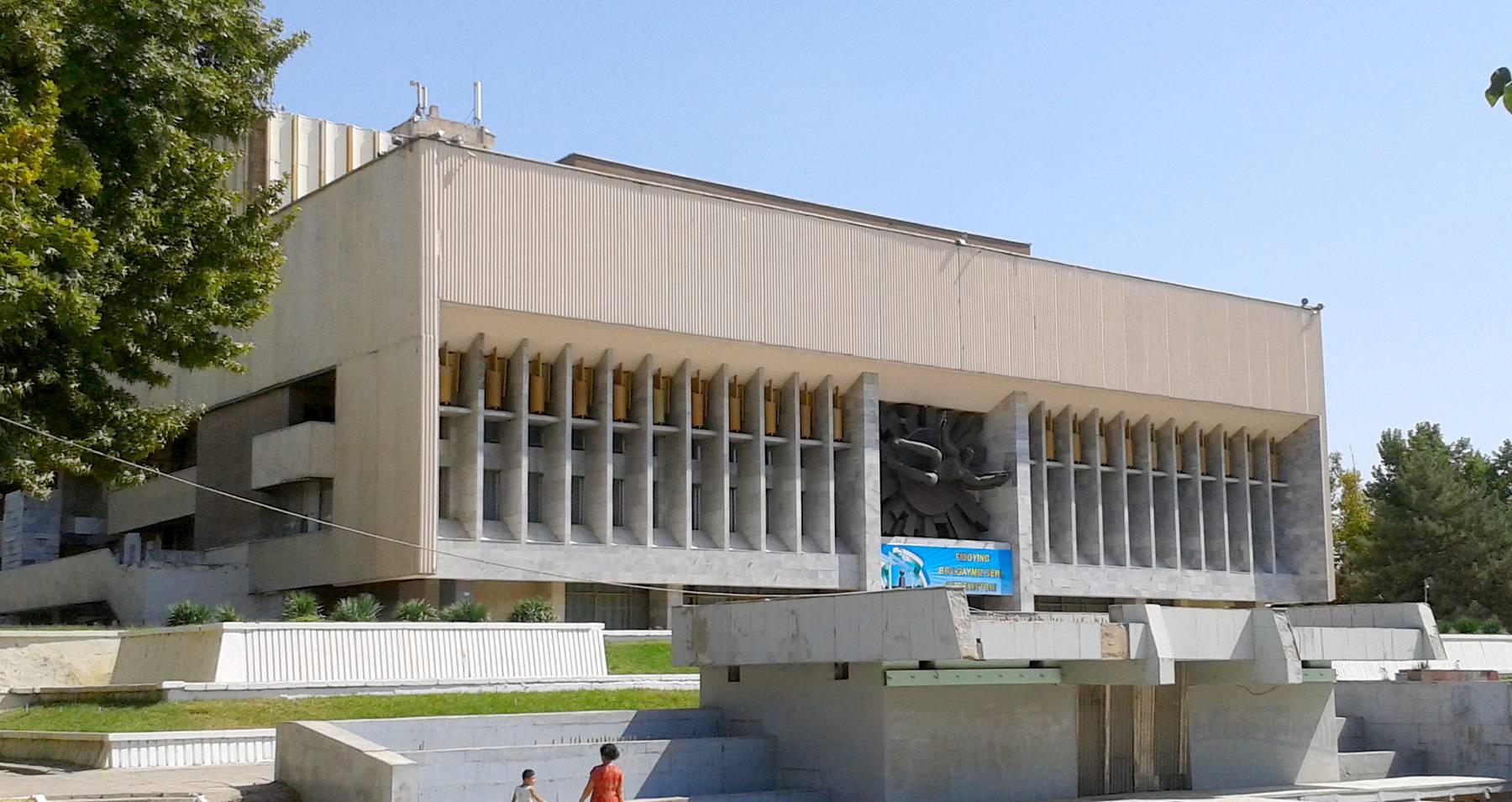
In the aviation builders’ town stands one of Tashkent’s most majestic buildings. Its design was cra...
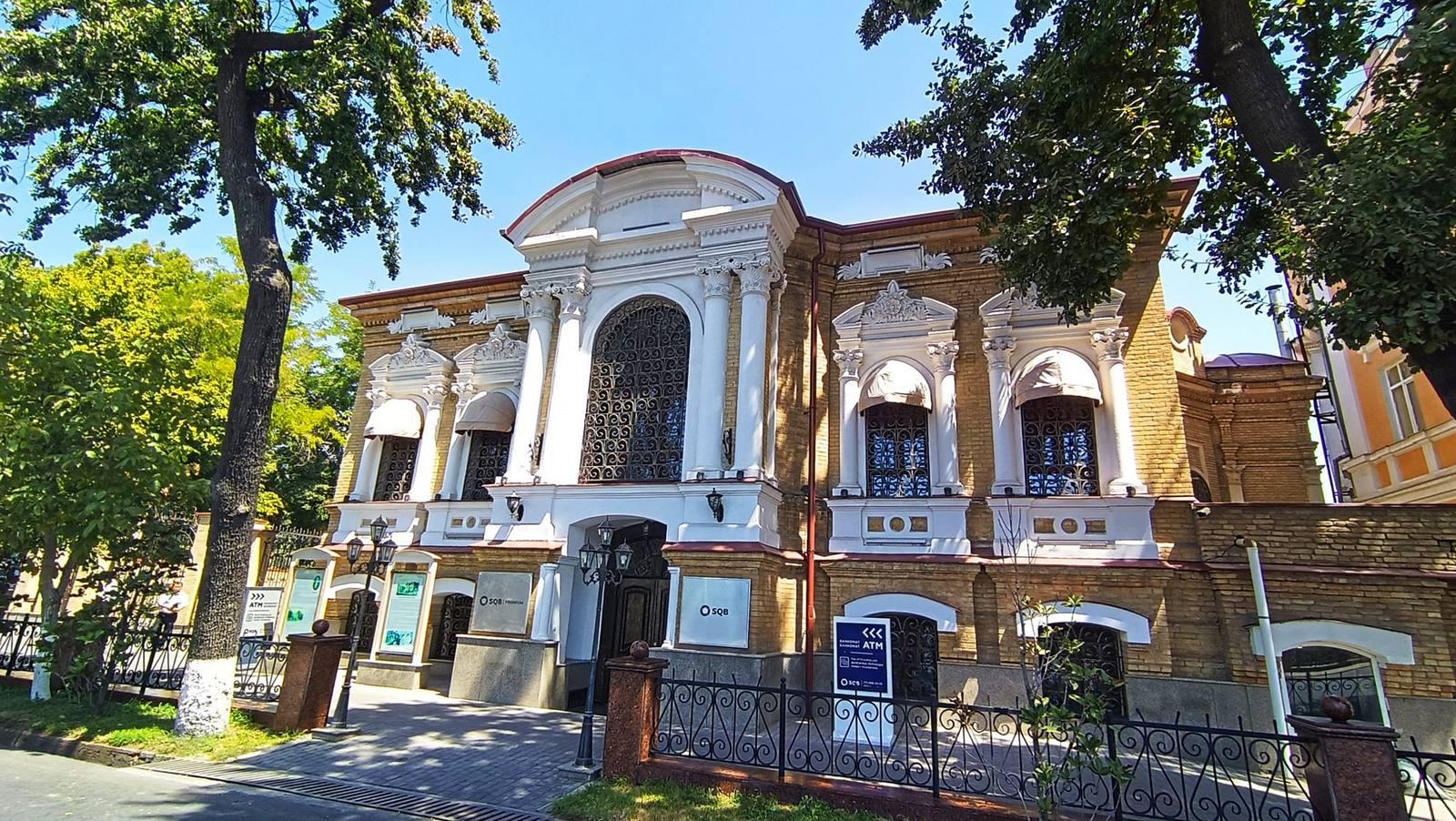
The beautiful building on the Square was constructed in 1895 by architect V. S. Heinzelman and was ...
A unique international scientific and educational complex located near the Hast-Imam ensemble – a ...